MUST and NCZD Sign Agreement to Develop AI-Based Zoonotic Early Warning and Quick Response System
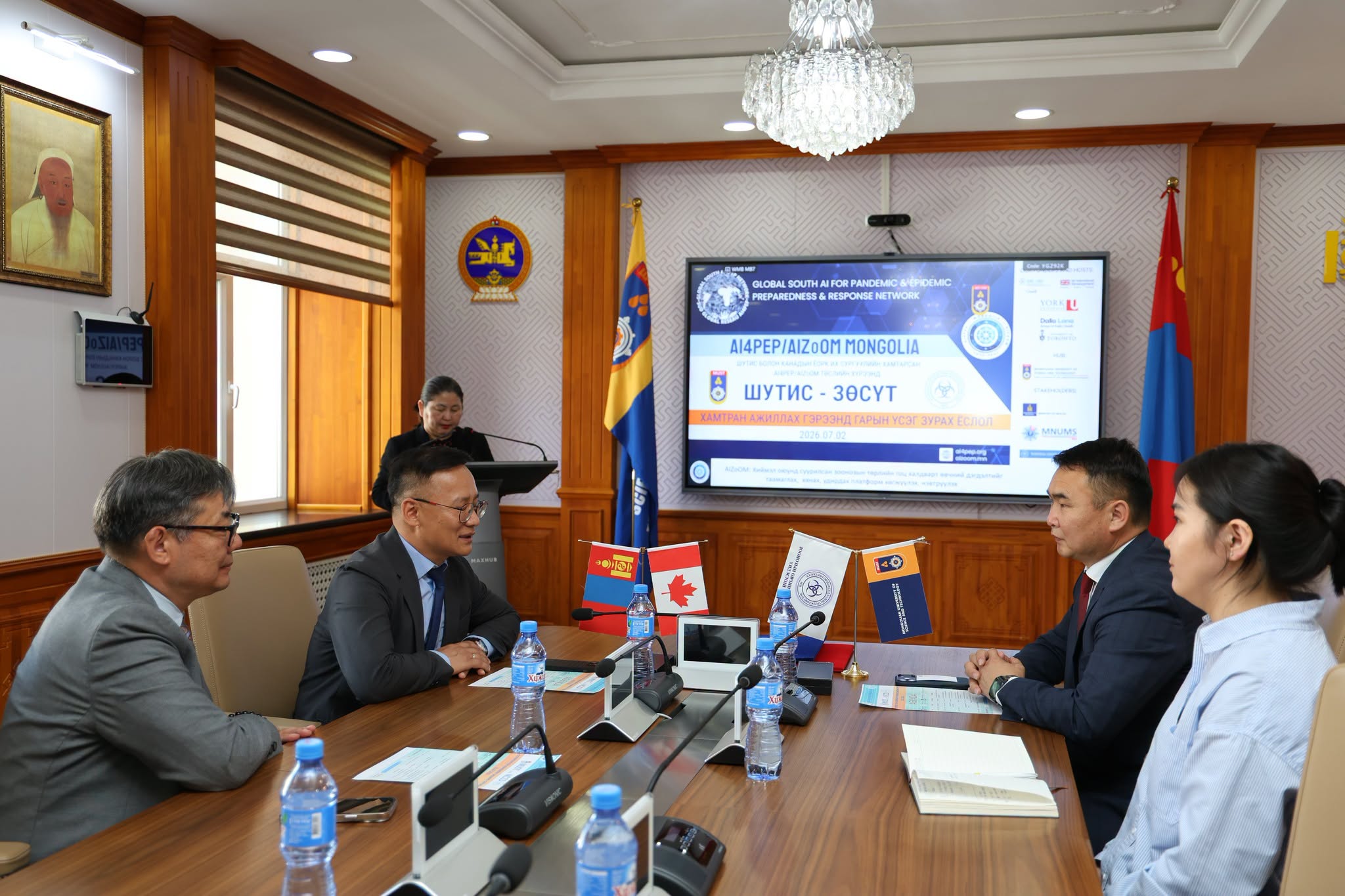
On July 2, 2026, the Mongolian University of Science and Technology (MUST) and the National Center for Zoonotic Diseases (NCZD) signed an agreement to jointly develop an AI-based natural plague foci activation surveillance, early warning, and quick response system for outbreaks.
The collaboration is part of the AI4PEP – AIZoOM project, funded by the International Development Research Centre (IDRC) of Canada and running from 2025 to 2027. The project aims to develop a platform that uses artificial intelligence, data-driven analytics, geographic information systems, and drones to predict, monitor, and respond more rapidly to outbreaks of zoonotic diseases.
The agreement was signed by Professor Tseren-Onolt Ishdorj, Dean of the Graduate School at MUST and Project Lead, and Kh. Ariunbold, Head of the Public Health, Surveillance, and Rapid Response Department at NCZD. It was endorsed by T. Namnan, Rector of MUST, and B. Amgalanbayar, Director of NCZD.
During the event, both parties emphasized the importance of this project in translating research outcomes into practical applications and advancing zoonotic disease surveillance, risk assessment, and early warning systems to a new level. They also noted that integrating NCZD's years of surveillance data and field experience with modern technology will enable more accurate prediction of disease spread.
Professor Ishdorj presented the AIZoOM project's goals, progress, and future plans, including joint research and innovation, data analysis and modeling for infectious and zoonotic diseases, capacity building, and expanding national and international collaborative projects.
This partnership represents a significant step toward introducing artificial intelligence and advanced technology into public health, supporting science and innovation-driven development, and expanding international collaboration.